Buy Right LCR Meter on GeM Portal for Your Application
GeM Portal Category: LCR Meter (Q3)
Swastik supplies LCR meter on GeM Portal for electronics labs, engineering colleges, R&D centres and industrial facilities that require reliable L, C, R and impedance measurements.
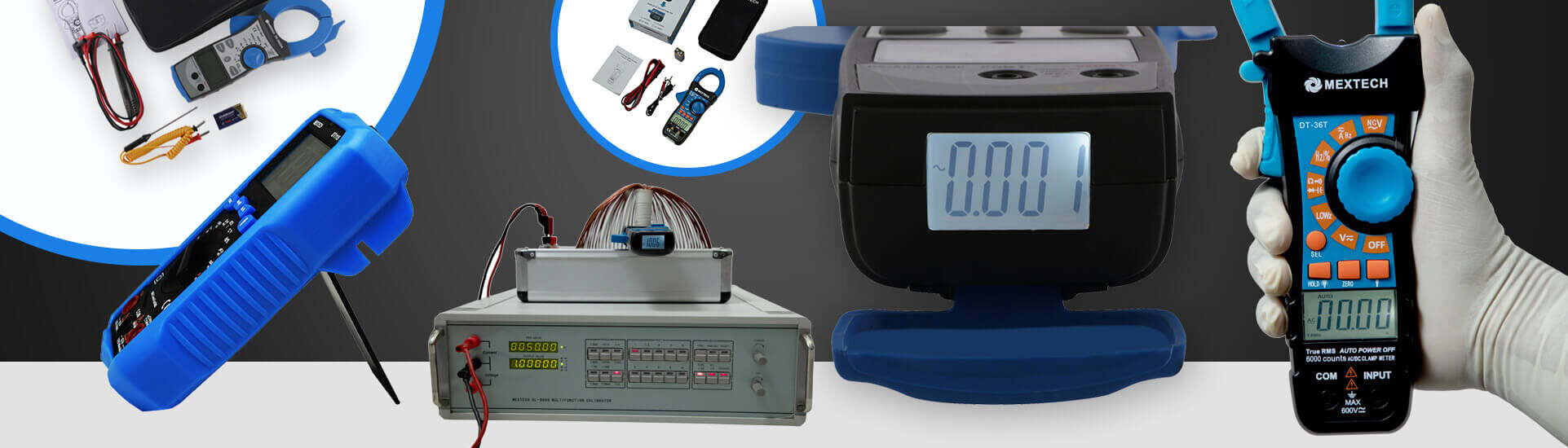
An LCR meter measures inductance (L), capacitance (C) and resistance (R) using an AC test signal and derives parameters like ESR, quality factor and dissipation factor for deeper component characterisation.
Modern digital instruments offer multiple test frequencies, selectable measurement modes and interfaces for automation, making them central to electronics teaching labs, R&D benches and production test lines.
On GeM, LCR meters typically appear within LCR Meer (Q3 Category).
Applications of LCR Meter & Use Cases
LCR meters are used wherever passive components and circuits need to be specified, tested or diagnosed.
Education and skill development
Electronics R&D centres measuring component behaviour across frequency to optimise circuits and filter networks.
Semiconductor, automotive and telecom labs performing impedance and ESR checks during design validation.
R&D and field remote measurement
Electronics R&D centres measuring component behaviour across frequency to optimise circuits and filter networks.
Semiconductor, automotive and telecom labs performing impedance and ESR checks during design validation.
Manufacturing, QA and maintenance
PCB and component manufacturing lines for incoming inspection and production testing of capacitors, inductors and transformers.
Maintenance teams for troubleshooting boards, identifying defective capacitors and detecting shorted or open windings in coils.
We can deliver LCR Meter with L1 purchase, Call/WhatsApp @ +91 7678385602
Popular LCR meters (Models, Frequency, Signal Ranges)
1. Bench LCR meters for institutional labs
Bench instruments offer higher accuracy, broader frequency coverage and better connectivity, making them suitable as reference meters in labs and production.
Hioki IM3523 – precision lab LCR meter
- Frequency range: 40 Hz to 200 kHz with 5‑digit resolution.[hioki]
- Basic accuracy: ±0.05% for impedance (Z), with support for parameters like Ls/Lp, Cs/Cp, ESR (Rs), Rp, Q and tanδ.
- Signal levels: 5 mV to 5 Vrms or 10 μA to 50 mArms, making it suitable for a wide range of components.
Hioki IM3533 / IM3533‑01 – LCR meter plus transformer testing
- Frequency range: 1 mHz to 200 kHz, including very low‑frequency analysis for advanced applications.[4test]
- Additional modes: transformer turn‑ratio, mutual inductance, ΔL and temperature‑compensated DCR, plus frequency sweep (IM3533‑01).[hioki]
- Accuracy: ±0.05% with built‑in low‑impedance high‑precision mode.[hioki]
These Hioki IM3523 / IM3533 models are explicitly named in GeM catalog support documents, so many institutions use them as a reference when describing “LCR meter on GeM Portal” requirements.
GW Instek LCR‑6000 series – production‑line focused bench LCR
- Series covering models LCR‑6002, 6020, 6100, 6200 and 6300.
- Test frequencies from 10 Hz to as high as 300 kHz depending on model, with basic accuracy around 0.05%.
- Interfaces such as RS‑232, USB and handler ports to integrate with automated sorting systems.
These make GW Instek units good candidates for electronics manufacturing and automated component sorting lines.
2. Handheld / portable LCR meters
Handheld instruments suit field work, maintenance and teaching labs that require flexibility rather than full automation.
DER‑EE DE‑5000 – widely adopted handheld LCR meter
- Test frequencies: 100 Hz, 120 Hz, 1 kHz, 10 kHz and 100 kHz.
- Parameters: Ls/Lp, Cs/Cp, Rs/Rp, ESR, D, Q and phase angle θ, with auto L/C/R selection and sorting modes.
- 20,000‑count dual display, battery powered, with accessories such as SMD tweezers and test leads.
Metravi handheld and bench LCR meters
- Models like Metravi 4070D handheld LCR meter provide test frequencies from 100/120 Hz to 100 kHz for industrial and lab use.
- Designed for robust industrial environments while remaining accessible for educational use.
3. Indian LCR meter ecosystem
Indian institutions frequently reference and procure from domestic manufacturers and suppliers catalogued in industry overviews.
- Meco, Rishabh, Metravi, Kusam‑Meco, Motwane and others provide digital LCR meters for education, maintenance and QA labs.
- Suppliers such as GSAS Micro Systems also distribute high‑end LCR meters and impedance analyzers from brands like GW Instek and Microtest in India.
Swastik leverages this ecosystem to provide a consistent LCR meter portfolio—bench, handheld and high‑precision—that aligns with LCR meter requirements appearing in GeM electrical lab BoQs and technical specifications.
GeM Procurement Support
LCR meter on GeM portal often appear as part of electrical laboratory equipment packages or as standalone items with attached specification documents and catalog references. These documents sometimes directly reference Hioki IM3523 and IM3533 catalogues, providing a de facto benchmark for LCR meter on GeM Portal performance levels.
Swastik supports GeM‑linked procurement by:
- Reading and mapping GeM spec documents – aligning your internal BoQs and tender clauses with catalog attributes used in GeM LCR meter documents.
- Preparing brand‑neutral technical justifications that still reference well‑known models (IM3523/IM3533, LCR‑6000 series, DE‑5000) as performance indicators where your policies permit.
- Helping with bundled lab packages, where LCR meters sit alongside oscilloscopes, function generators and power supplies in one GeM procurement line.
- Coordinating GeM orders and institute‑level POs, so that technical configuration remains consistent even if procurement routes differ across projects.
Frequently Asked Questions
What is an LCR meter on GeM Portal?
An LCR meter on GeM Portal is an inductance, capacitance and resistance measuring instrument procured through the Government e‑Marketplace under electrical or electronics lab categories.
Which LCR meter models are commonly referenced in institutional specifications?
Many Indian lab specifications and GeM catalog documents cite Hioki IM3523 and IM3533 series as benchmark bench LCR meters due to their ±0.05% accuracy and 40 Hz–200 kHz or 1 mHz–200 kHz frequency ranges.
What is the difference between handheld and bench LCR meters?
Handheld LCR meters like the DE‑5000 are battery‑powered, portable and suited to maintenance and teaching labs, while bench LCR meters such as IM3523/IM3533 or LCR‑6000 series provide higher accuracy, broader frequency range and better automation for R&D and production.
What applications does an LCR meter cover in an institutional setting?
Typical uses include testing capacitors and inductors, PCB and circuit troubleshooting, component sorting, research on passive networks and teaching measurement techniques in engineering labs.
How does Swastik help choose between different LCR meter models?
Swastik reviews required accuracy, frequency range, use‑cases (teaching vs R&D vs production) and available budget, then proposes a mix of bench and handheld LCR meter options from appropriate brands aligned to those needs. We are registered distributor of LCR meter on GeM Portal.
Can LCR meters supplied through Swastik integrate with automated test setups?
Yes, many bench models Swastik supports, such as GW Instek LCR‑6000 series and Hioki IM35xx series, provide interfaces like RS‑232, USB and handler ports that are designed for production‑line automation and data logging.
Are the LCR meters suitable for both educational and industrial labs?
Bench and handheld meters discussed above are used in universities, electronics manufacturing, power electronics labs and R&D centres, as shown by Indian manufacturer and supplier case studies.
What documentation does Swastik provide during procurement?
Swastik provides OEM datasheets, catalog pages (for example, Hioki IM3523/IM3533 catalogues), compliance statements and any specification documents needed for GeM uploads or institute‑level technical scrutiny.
How does Swastik support calibration and after‑sales needs?
The company coordinates with OEMs and authorised service partners where available, and can recommend calibration intervals and procedures consistent with manufacturer guidance and laboratory accreditation practices.
Can a single LCR meter serve multiple labs in a college?
A single bench LCR meter can be shared between labs if scheduling permits, but many institutions choose at least one bench meter in the central lab plus handheld units for individual labs to avoid bottlenecks during examinations and lab sessions.